
How to Find a Juneau County Owner
A few checks give you a confident answer. Start with the situs address in the county's Catalis real-estate search, which links the address to a parcel. Copy the number, the municipality and the legal description. Then search the owner name and legal description in LandShark, where the recorded deed confirms the transfer. If the two disagree, compare their dates. For an entity owner, check the legal name in Wisconsin's corporate search and read the deed for the signer.
- Find the parcel through the county assessment portal using the property's address or a known owner name.
- Write down the parcel number, municipality and full legal description shown for that land.
- Search LandShark by the likely grantee and then by legal description to confirm the recorded transfer.
- For an LLC, look up its legal name and registered agent in Wisconsin DFI; for an estate, find the probate file and recorded transfer.
- Keep the owner name, mailing address and situs address as separate facts with their record dates.
Juneau County Owner of Record
The Catalis real-estate form offers several name controls. You can enter a last name or business. A Status menu narrows the results further. Choices include Current Owner, Current Co-Owner, Former Owner and All Except Former, which makes it easy to compare current and former holders of a parcel. The form does not label a returned card with an exact owner-of-record heading, so check the live detail display and its tax year before quoting a name as current.
The Juneau County Catalis public portal opens the guest search route to the real-estate form. It shows no parcel card by itself. Select the parcel and inspect it directly.
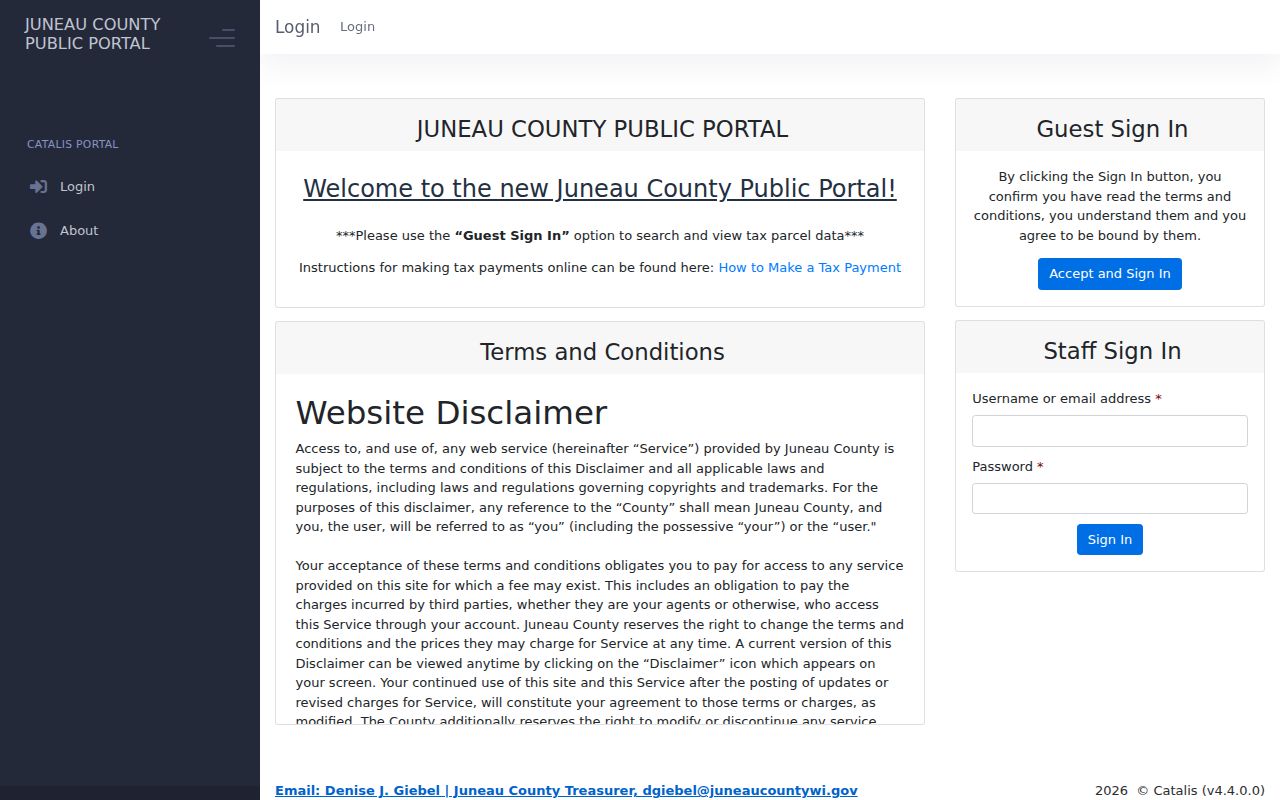
The portal carries a caveat of its own. It warns that data may be incomplete or out of date and is not a title warranty. Heed it after a closing or estate transfer.
Where Juneau County Owner Names Appear
No single record does every job. The assessment roll ties an address to a parcel and an owner name. A deed records the transfer itself. DFI supplies the corporate identity when the owner is an LLC or other entity, and probate records may explain why an heir or personal representative appears in a deed. Compare the source and date for each name.
| Source | Owner Info It Gives | Access |
|---|---|---|
| Assessment portal | Owner and address search controls; exact parcel-card owner label not verified | Catalis Guest Sign In |
| LandShark deed index | Grantor and grantee on a recorded instrument | Quick party search and advanced legal-description search |
| Wisconsin DFI | Entity name, status, registered agent and office filings | Public corporate-record search |
| WCCA / Register in Probate | Estate and court events that may connect to a transfer | Public case search; request the actual file from the courthouse |
An owner of record is simply the name documented in a public record. It is not always the resident. Nor does it show who manages the land. The listed name may be a trust, an LLC, an estate or a co-owner, and the mailing address may belong to a fiduciary or registered agent. Read the deed and any probate order before drawing conclusions from a nearby address.
Confirm the Juneau County Deed
Take the parcel's legal description to LandShark next. The Register of Deeds offers two routes there. Quick Search finds a party name, while Advanced Search can use the legal description or other pertinent information. When a transfer is not obvious, search both parties in both directions. The buyer should appear as grantee on the acquisition instrument, with the prior owner as grantor.
LandShark calls its index a working index. It warns of errors and omissions. The office recommends searching a property more than one way, and timing matters too. A just-recorded party and tract index is generally available the next working day. The image generally follows by noon the next working day.
That lag can explain a fresh mismatch. The Register of Deeds publishes no confirmed earliest online coverage year or current copy fee schedule. A missing deed is not proof of none. Ask the office about older indexes or books instead. Its disclaimer also notes that pre-1997 images may be hard to read, though that year is not a verified index cutoff.
Juneau County LLC and Trust Owners
A parcel is often vested in a company, a trust or a fiduciary rather than an individual. LLCs are the most common case. Pull the exact legal name from the assessment card or deed, then check Wisconsin DFI for entity status, registered agent and filing address. Those details identify the company and a contact channel. They do not prove ownership of the parcel; only the recorded deed makes that connection.
Trust names come in more than one form. Search both the trust and the trustee names. Then read the signature block for the capacity in which each person acted. A personal representative or executor may sign an estate deed. A related probate file shows the appointment, inventory, legal description and distribution order, but the transfer still must be confirmed in the Register of Deeds records.
When a business filing matters, use the Wisconsin DFI corporate search. For an estate transfer, turn to WCCA. It locates the Juneau County probate case. Then request the underlying file from Register in Probate.
Juneau County Mailing and Situs Addresses
The county portal splits every address into two types. A Property Address marks where the land sits. A Mailing Address shows where tax notices go, which can be a different place entirely. A trustee, a company office, a personal representative, or an out-of-county owner may receive the bill far from the parcel. Never read a mailing address as the property's location or as proof of occupancy.
County GIS maps these edges. Layers for City and Village Address Points, ordinary address points, ZIP codes, and Minor Civil Divisions show where a mailing city fails to match the parcel's taxing jurisdiction. Wisconsin Dells crosses into both Juneau and Columbia counties. Check the county boundary before deciding which Register of Deeds holds the deed.
Trust the parcel number and the legal description. Streets get renamed. One road can cross several municipalities. Near Mauston, New Lisbon, or Elroy, confirm the city or town in GIS and the assessment search before contacting a municipal office.
Wisconsin Owner Record Privacy
Wisconsin's Public Records Law keeps most government records open. Property records are no exception. Still, openness has limits. Safe at Home, under Wis. Stat. §165.68, gives eligible participants a substitute address plus mail-forwarding protection, so a county record may display a protected mailing route instead of a person's actual residence.
MyVote serves one voter at a time. It is not a bulk owner directory. Certified vital records sit under separate eligibility rules in Wis. Stat. §69.20 and can establish an estate identity for an authorized requester, though they are neither a deed nor proof of title. Keep any public-record search tied to a lawful property, boundary, tax, or estate question.
The Wisconsin MyVote lookup answers one voter's status and polling place. It is not a parcel-ownership source. It will not build a neighborhood directory.
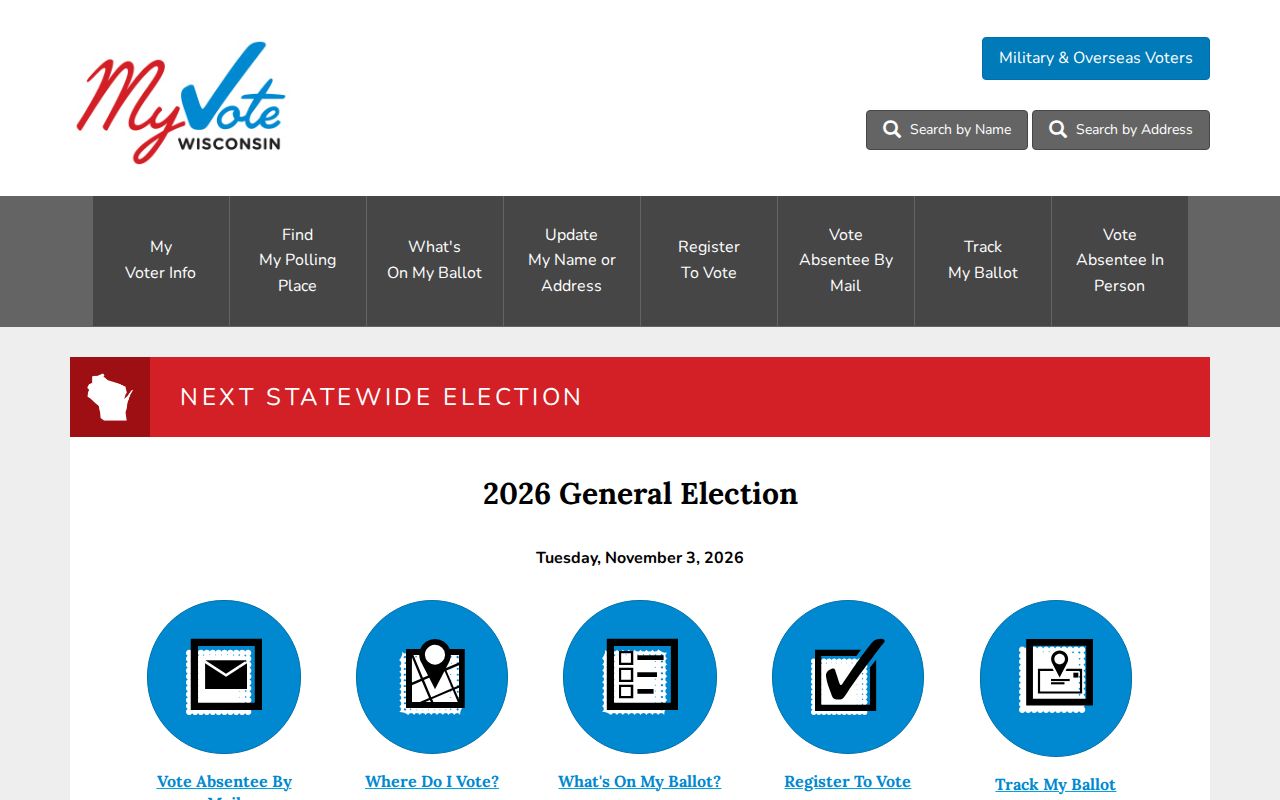
Use MyVote only for individual voter status. Ownership questions belong elsewhere. Confirm land ownership with the parcel record and the recorded deed.
For an estate-related name, separate the court question from the land question. A circuit case search can locate the probate file. The Register in Probate holds that court record. An appointment order may show who can act for an estate, but only a recorded conveyance links a transfer to the parcel's legal description.
Wisconsin DHS separates a certified vital record from genealogy research access. Eligibility rules differ by document. Never treat a restricted certificate as a routine ownership search. Instead, compare the deed, the assessment parcel, and any probate instrument for the property question.
Names and addresses must never be used to watch, threaten, or harass a person. If a record exposes a protected address, do not try to uncover or publish the participant's actual location. Ask the custodian about proper handling.
What a Juneau County Owner Search Cannot Tell You
A public owner name is not a live occupancy check. It is not a complete title search either. The assessment roll can lag behind the deed. The county cautions that its public data may be incomplete or out of date. No public search guarantees that a later instrument is absent. Read the dates closely. Match the legal description. Ask the custodian for an official copy whenever a legal or financial decision rides on the result.
Lawful use. Juneau County owner lookups support property research, purchase diligence and civic review. Do not use names or mailing addresses to stalk, harass, intimidate or harm anyone.