
What Juneau County's Owner Record Shows
The county's assessment portal is the practical source for an owner name. That name ties to a tax parcel. Field labels vary, so confirm them in the live record. The table below separates two things. One is fields to check in the portal. The other is facts a deed or related source supplies. Always note the year and date beside any name. An assessment entry can lag a transfer.
| Owner name | Check the current parcel card; exact field label not verified. |
|---|---|
| Vesting or capacity | Read the deed for co-owner, trust, LLC or fiduciary wording. |
| Mailing address | Tax correspondence destination; may be an agent or office. |
| Situs address | Property location, distinct from a mail destination. |
| Deed reference | Confirm in the recorded instrument and its legal description. |
| Effective timing | Use the instrument's execution and recording dates, not a guessed roll-refresh date. |
The owner of record is not necessarily an occupant. Never infer a residence from the tax-mailing address. An LLC may list its agent. An estate may list its personal representative. For title questions, the latest recorded deed and later instruments carry more weight than any directory-style assumption about who lives there.
Juneau County Owner Search Entry
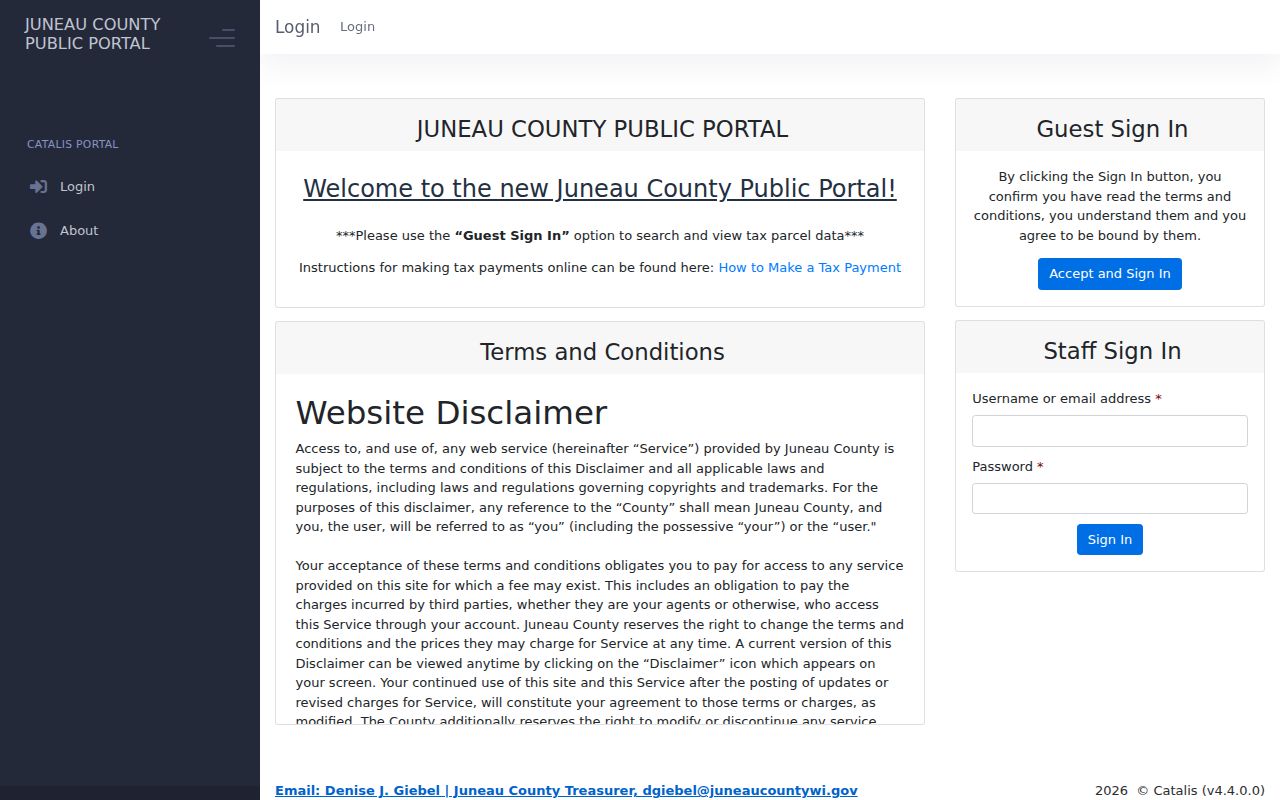
The county's real-estate search sits behind a Catalis Guest Sign In. The form accepts a last name or business, a first name, current-owner status, parcel, and address. Tax-year selection is included. So are Property Address and Mailing Address modes. Those controls find an owner record, but they do not show when the county roll last changed.
The Juneau County public portal shows the sign-in screen. It displays the entry route only, with no parcel or owner card. Use the live results for exact field names.
An unexpected owner field usually has a simple cause. The search may have used a mailing address, a former-owner status, or a different tax year. Carry the parcel number and legal description into LandShark next.
Confirming Juneau County's Current Owner
Check the assessment name against the most recent deed. A second copy of the same roll proves nothing. LandShark offers a party-name Quick Search and an Advanced Search that can use a legal description or other pertinent information. Search both grantor and grantee. Then make sure the described parcel matches the assessment card. A deed recorded after the roll date is a strong clue the public owner field has not caught up.
- Locate the parcel in Catalis and note the tax year, owner-search mode and parcel number.
- Use LandShark's party search to find the latest acquisition; repeat with the legal description.
- Read the vesting and signature capacity on the deed, including any trust or company name.
- Check later releases, corrective deeds or court orders before calling the record current.
- Owner of record
- The person or entity named by a record at a stated point in time.
- Vesting
- The way the deed states an interest is held, such as jointly or through a trust.
- Registered agent
- A listed contact for a company, not necessarily the owner of the land.
Juneau County Assessment Timing
Juneau County has not published the exact delay between a deed recording and an assessment-roll change. The gap is real. Treat the owner field as a dated assessment record, not a live notification. If a sale just closed, the Register of Deeds confirms the transfer. A tax portal can be accurate for its stated year while still showing an owner who has since conveyed the parcel.
LandShark's party and tract indexes are generally available on the next working day after recording, and images follow by noon that day. Those are recorder timing notes, not the assessor's schedule. Timing differs by office. Check the deed's recording date against the tax year on the roll. Match the legal description too. If the indexes lag, check again or call the Register of Deeds.
A current-owner filter is a search choice, not a certification that no later instrument exists. The county portal warns that public data may be incomplete or out of date. So compare dates. Do not assume a just-recorded transfer has refreshed the portal.
Each record answers one question. The deed proves the transfer. The roll shows who gets the tax bill. Trust the dates. Read the legal description on both before drawing a conclusion about the owner of record.
Juneau County Trust and LLC Vesting
The current owner may be a company, trust, co-owner group, or estate. Start with the deed. Read its grantee and vesting language instead of trying to infer the person behind a legal entity from a mailing address. An LLC's registered agent in Wisconsin DFI is a contact for the company, not automatically the landowner or occupant.
An estate works differently. The personal representative may sign an instrument after appointment in probate. WCCA can point to the Juneau County probate case. The Register in Probate holds the court file. Review the inventory, order, or deed reference, then confirm the transfer was recorded.
Search by the exact entity name in the county assessment form and in LandShark. Spellings often differ. When they do, compare the legal description and document dates. One name match alone cannot attach a person or company to a parcel.
A property question may also involve a licensed professional. Wisconsin's DSPS LicensE lookup checks professional credentials. A license record does not identify a parcel owner. It does not replace a deed search.
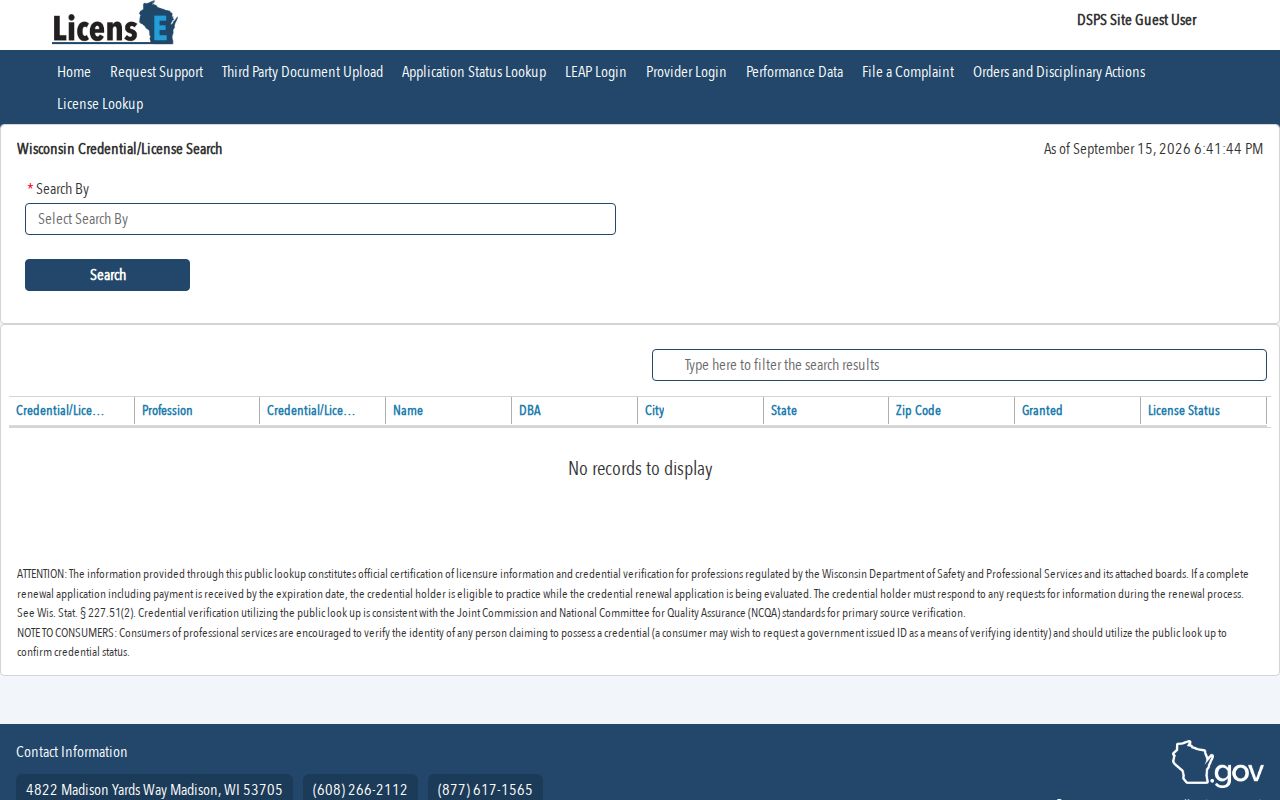
Let the matched legal description and the recorded instrument connect an owner name to land. A credential lookup only proves a license.
Juneau County Later Deeds and Releases
One deed rarely tells the whole story. A newer instrument can be followed by corrective deeds, personal-representative deeds, transfer-on-death filings, releases, satisfactions, or court orders. Each one touches the same legal description. A recorded mortgage remains an encumbrance until released. An assessor card will not show whether the balance has been paid off.
When tracing a parcel, run the owner of record and the prior owner. Also run any lender or servicer, and the parcel description itself. Satisfactions are often indexed under the lender or an assignee. A release missing from an owner-name search may surface under the other party. Court actions that appear in WCCA can be pulled from the Clerk of Circuit Court. Compare any judgment or sheriff's deed against the Register of Deeds record. That confirms which instrument controls.
Treat Juneau County's instrument index as a working tool, since errors and omissions happen. Cross-check a name result with a legal-description search. When exact recorded wording matters, ask the Register of Deeds for a certified copy.
Juneau County Situs and Mailing Fields
Situs and mailing fields serve different purposes. The county's Catalis search form lets you pick Property Address or Mailing Address separately. So a parcel can sit in one town while the tax bill travels to a city address, a company office, or an out-of-county agent. Keep each field with its own label. A postal city is never a safe stand-in for the legal municipality.
Juneau County's GIS map layers ZIP codes, address points, city and village address points, and Minor Civil Divisions. For a parcel near Mauston, New Lisbon, or Elroy, confirm the municipality and parcel number before asking a city clerk about permits. Wisconsin Dells straddles Juneau and Columbia counties. That split can change which office holds the deed, along with where the tax bill is paid.
A situs address makes a handy search key. The legal description is the stronger deed cross-check. Save both before you verify a current owner.
Reaching a Juneau County Property Owner
A mailing address on the tax roll is a destination for bills. It is not proof of where a person lives. Contact about a property matter should go through a documented business route. A documented mailing route works as well, with privacy respected. Safe at Home, under Wis. Stat. §165.68, gives qualifying participants a substitute address plus mail-forwarding protection. Owner-of-record data should never be used to work around that safeguard.
Lawful use. Juneau County owner records support property diligence and civic questions. Do not use names or mailing addresses to stalk, harass, intimidate or harm anyone.
Wisconsin's Public Records Law, Wis. Stat. §§19.31-19.39, presumes broad access. Separate statutes still shield certain records and participants. An owner search is not a resident directory. If the goal is understanding ownership, rely on the deed, the assessment record, and the parcel description rather than assuming who lives at the site.