
Juneau County Property Value Types
Juneau County property research turns up several distinct figures. Assessed value sits on the local assessment roll. Fair market value is an estimate used in the assessing process. Equalized value is a Wisconsin DOR measure at the municipality level. Last sale price comes from a deed or related sale record. Treat each label carefully. Field names on the parcel card can change. So confirm the live field and tax year before quoting any number from the portal.
| Value | What It Is | Where |
|---|---|---|
| Assessed value | Local parcel value used in the assessment and tax process. | County assessment system; exact card label not verified |
| Fair market value | Estimate of value used to compare assessment ratios. | Assessment work and DOR ratio guidance |
| Equalized value | Municipality-level DOR measure for assessment comparison. | Wisconsin DOR reports |
| Last sale price | Reported transaction evidence, not a current appraisal. | Deed/transfer record; parcel-card sale field not verified |
| Land and improvements | Separate value components shown in DOR's county roll report. | DOR 2025 report; verify parcel card fields live |
An assessed value can drift far from a recent sale price. The assessment is a tax measure. The sale is one point in time. The roll may use a different valuation date. Wisconsin also separates a single parcel's assessment ratio from a municipality's assessment level. That aggregate ratio belongs to the whole city or town. No Juneau County average can stand in for each municipality's own level.
Looking Up a Juneau County Value
Open the Juneau County Catalis public portal. Choose Guest Sign In for tax parcel data. Search by address, owner, municipality, or parcel number. Pick the tax year first, then compare numbers. Record the parcel ID and legal description. The result can then be checked against the DOR roll and a recorded transfer. The portal itself warns that data may be incomplete or out of date.
- Open Catalis Guest Sign In and search the real-estate parcel by situs address or parcel number.
- Write down the assessment year, municipality, legal description and each value label shown.
- Compare the parcel with the DOR roll report for its municipality and year.
- Use LandShark to check the recorded sale instrument; treat consideration as transaction evidence, not an appraisal.
- Assessed value
- The local value assigned to a parcel for assessment and tax purposes.
- Fair market value
- An estimate used to understand a parcel's market relationship; it is not a guaranteed sale price.
- Assessment ratio
- Parcel assessed value divided by fair market value.
- Assessment level
- A municipality-wide relationship between assessed totals and equalized value.
- Sale price
- The amount reported for a specific transaction, subject to its terms and record.
For the parcel route, use the Juneau County Catalis assessment portal, where card labels and sale-history fields may shift as the county updates them.
Juneau County Land and Improvement Values
The DOR 2025 Juneau County roll report shows acres, land value, improvement value, and total value. Those figures sit beside the local parcel and legal description. That split reveals how a parcel's assessed total is assembled. It cannot confirm the building's condition, a recent remodel, or every site feature.
Compare the parcel description and acreage against the county's assessment and GIS records. Something look wrong? Ask the local assessor. Ask how the roll was built and what evidence would support a review. The Catalis parcel card's precise history fields may not display every year or component online. Check before assuming.
The DOR report works well as a public roll example. But its municipality-level summary is not an appraisal. A comparable must match the subject parcel in land, improvements, location, use, and sale date. Its price means little before that.
Juneau County Parcel Ratio and Level
Wisconsin DOR defines the parcel assessment ratio as assessed value divided by fair market value. Its guide walks through an example. It uses $140,000 in assessed value against $150,000 in market value, and that yields a ratio of 93 percent. That sample shows the math. It is not a Juneau County parcel result. The assessment level, by contrast, is a municipality-wide relationship between assessed totals and equalized value. DOR's Summary of Aggregate Ratios exists to compare those local levels. It does not convert into an estimate for one sale. Both measures compare assessed and market-oriented values, yet they answer different questions. Rely on a Juneau municipality report rather than countywide shorthand when comparing levels. The DOR aggregate-ratio explanation describes the municipal measure. The assessor ratio guide defines the parcel calculation.
Juneau County DOR Value Reports
The 2025 Juneau County assessment-roll report shows the fields behind a municipal comparison. The fields include local parcel, description, county, municipality, school and special districts, acreage, land, improvements, total value, and aggregate ratio. Read it to see how the state presents local assessment data. Then open the parcel record for its own figure and year. On March 24, 2026, Wisconsin DOR announced final 2025 sales reports for assessors. Those reports cover usable arm's-length sales and assessment-to-sale ratio analysis. That sales material requires assessor access. A public Juneau parcel lookup does not necessarily expose the same comparable-sales detail. For current figures, read the DOR property-value statistics page and the 2026 sales-report announcement. Use them when comparing local assessment levels. Think an assessed figure is wrong? The local Open Book and Board of Review dates set the window. A property owner can raise the issue during it. Wisconsin DOR's Board of Review calendar routes you to municipal schedules. It does not show or change any parcel value.
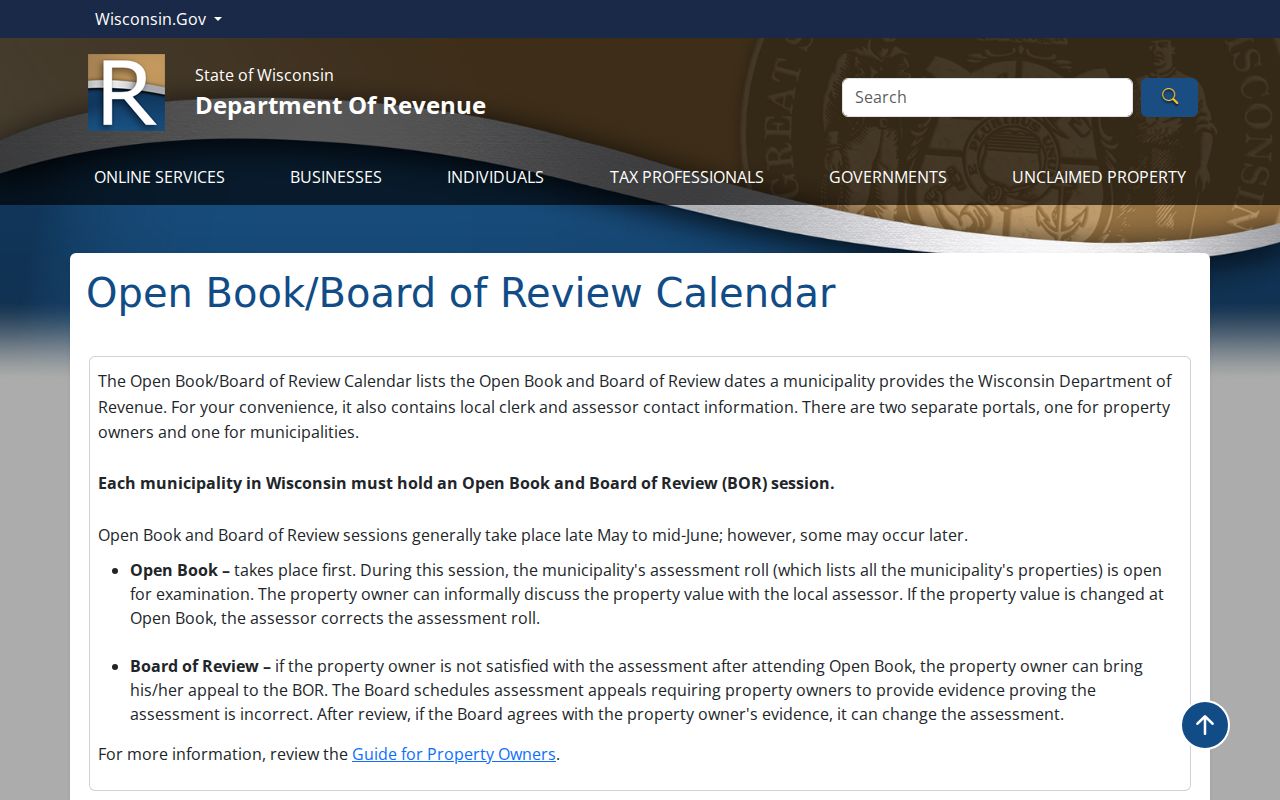
Check the municipality's posted schedule and current objection instructions before attending or filing. The calendar is a procedural aid, while a real value comparison still rests on the parcel's assessment record and relevant sales evidence.
Juneau County Sale Price Evidence
A sale price on a recorded deed tells you what one buyer paid one seller in one transaction. It is not an appraisal. Nor is it the current assessed value. Context decides its worth. Catalis parcel cards can carry sale-history details, while LandShark indexes recorded instruments by party and legal description, so open the deed itself and check whether consideration appears in the document.
Timing matters too. A closing after the assessment date rarely shows up in that year's tax roll. Related-party deals and unusual terms make weak comparables. DOR's arm's-length sales analysis exists for assessment review, so read any single public record in its own context.
Before stacking two prices side by side, weigh the parcel's municipality, acreage, land value, improvement value, use and sale date. A gap may just be a bigger lot. Or a newer building. The public portal does not publish a complete comparable-sales history for every Juneau County parcel, so treat the assessor's roll and the recorded deed as separate pieces of evidence.
Never confuse last-sale data with assessed value. The county index confirms recorded land instruments. It is not a sales-comparison appraisal report.
Juneau County Value and Tax Bill
Assessed value is only part of the story. A tax bill also reflects local levies, districts, credits, payments and other charges. The guest parcel card does not show every exemption. Before comparing bills or estimating a payment, ask the assessor or treasurer which figure and year appear on the official roll.
Money questions go to the treasurer named on the bill. The local office takes the first installment. Later installments may route to the county. A past-due balance is not a measure of value.
Assessment review and payment routing have their own page. The separate Juneau County property tax records page explains both. Here the value discussion stops at the meaning and source of each number.
What a Juneau County Assessed Value Is Not
A Juneau County assessed value is a tax figure, not a market verdict. It is not a selling price. Nor is it a lender's appraisal. It is not a title conclusion either. The number can differ from a recent transaction, and it can even carry a data error, so match the year, land and improvement components, municipality and legal description before using it in a decision.
Value vs. price. An assessed number is set for taxation and is not a prediction of sale price. For a transaction-specific opinion, use a qualified appraiser and the relevant sale evidence.