
Juneau County Deed Records by Instrument
The Register of Deeds records the instruments that affect land: deeds, mortgages, releases, easements, liens, plats, and correction documents. A deed moves an interest from grantor to grantee. Mortgages and liens record claims or security interests instead. A satisfaction or release later shows a recorded claim was discharged. The record type names the legal action taken. It does not settle every question about a parcel's present status.
| Deed Type | What It Does | Common Use |
|---|---|---|
| Warranty deed | Transfers the described interest with the deed's stated assurances. | Commonly checked after a sale. |
| Quitclaim deed | Transfers whatever interest the signer holds, without a promise of full title. | May appear in family or corrective transfers. |
| Trustee or personal-representative deed | Shows a fiduciary signing for a trust or estate. | Trace authority in the trust or probate file. |
| Mortgage and release | Records security against land and a later satisfaction or release. | Check both lender and owner names. |
| Easement or covenant | Records use rights or restrictions that may continue with land. | Read the referenced legal description and plat. |
Juneau County publishes no full list of its document-type labels, so this table describes common instruments found in land records generally. A deed conveys an interest. A mortgage secures a debt. A release or satisfaction discharges a prior claim. Easements and declarations can shape access or use without changing the owner of record, so read the actual image and any later instruments before drawing a conclusion.
Juneau County Grantor-Grantee Index
LandShark offers two routes. Quick Search works by party name, while Advanced Search uses a legal description or other pertinent information. Search a buyer as grantee to find an acquisition, then follow the named grantor backward in time. Search a seller as grantor. The county calls this a working index. Errors and omissions are possible, so a second search by legal description can reveal an entry a name-only search misses.
- Locate the likely acquisition and note its parties, recording date and legal description.
- Search the grantee as a grantor to find a later conveyance, and search the grantor as a grantee to find the earlier link.
- Match the legal description at every step; do not assume an address or surname alone identifies the same land.
- Use both party and legal-description searches when the chain breaks or a name may be misspelled.
- Grantor
- The party conveying an interest in the instrument.
- Grantee
- The party receiving the interest described by the instrument.
- Chain of title
- The ordered record of transfers and related land interests.
- Book and page
- A volume and page citation used in older references; newer records may use an instrument reference.
Juneau County Recording Wall Dates
Timing shapes what a search returns. The Register of Deeds posts grantor-grantee and tract indexes generally by the next working day after recording. Images generally follow by noon that day. High volume can slow things down. Equipment issues can too. A sale recorded the day before a search may be missing from one view, or its index entry may appear before the image is ready.
The wall date also explains gaps between a new deed and the assessment roll. A deed is the recorded transfer evidence. The county publishes no precise lag for assessment-roll updates. For a recent transaction, keep the recording date and parcel legal description in your notes, then recheck the public assessment record later.
These dates are a guide, not a guarantee. Exceptions exist. The official LandShark disclaimer describes the working index and its timing exceptions.
Juneau County Deed Search Modes
Juneau County documents two LandShark search modes. Quick Search runs by party name. Advanced Search uses a legal description. Exact field labels, a document-type dropdown, and the earliest online year are not shown in the county's static material. Before treating an empty result as proof that no instrument exists, ask the Register of Deeds.
| Quick Search | Party-name route; try both grantor and grantee roles. |
|---|---|
| Advanced Search | Legal description and other pertinent information, according to the disclaimer. |
| Tract index | Referenced as an index source; exact live interface and labels were not verified. |
| Coverage cutoff | Earliest online index year not located; do not infer it from image legibility. |
The live route runs through the county's LandShark login and search. Registration may be required. Index and image access can carry separate terms. No copy-fee schedule is published online, so ask the office for the current charge before ordering copies.
When a party search returns a candidate instrument, compare the recording date and the full legal description before treating it as a transfer. Then search both sides of the transaction. A person may appear as grantee on an acquisition and grantor on a later conveyance. Legal entities need exact spelling. Compare the same land description rather than trusting a similar business or owner name.
Deeds can be partial. A document may describe only part of a larger tract or reference a lot created by a later certified survey map. Carry the parent description and the lot or CSM reference into GIS and recorded-map sources. The party index helps you locate instruments. But the legal description makes the match.
Juneau County's Older Deed Books
Juneau County's online deed records have no stated starting year. A 1997 note in the official disclaimer concerns legibility, not coverage. Pages recorded before the later legibility requirement can be hard to read. Pale or blue ink may not reproduce clearly. That note is not proof the index begins in 1997. A blurry image or an empty online search never means a deed went unrecorded.
For deeper history, ask the Register of Deeds about deed books. The office also keeps grantor-grantee indexes, tract indexes, and microfilm. The Wisconsin Historical Society's Archives Research Room holds material that is not all online. The FamilySearch catalog may carry a Juneau County land-record entry. Bring the parcel's legal description, section, town, range, lot, and block whenever you know them. Those details help separate a misspelled party name from a different piece of land.
The 1898 Foote and Hood plat book makes a useful bridge. Its town and city maps and patron directory can suggest a historic owner or road. They are not current title proof. Check the atlas against present GIS and the recorded deed or CSM. Do this before treating a patron as part of the chain of title.
Browse the Wisconsin Historical Society's Juneau County atlas directly. Old deed books still need a search to establish an actual transfer.
Juneau County Liens and Court Clues
A Juneau County property trail can run through many instruments. Mortgages, assignments, satisfactions, easements, covenants, liens, judgments, lis pendens, and correction instruments all carry weight. Search by current owner, prior owner, lender or servicer, and legal description. A mortgage record shows an instrument, not a payoff balance. Ask the lienholder for the payoff. Then check the recorded satisfaction or release for its public-record status.
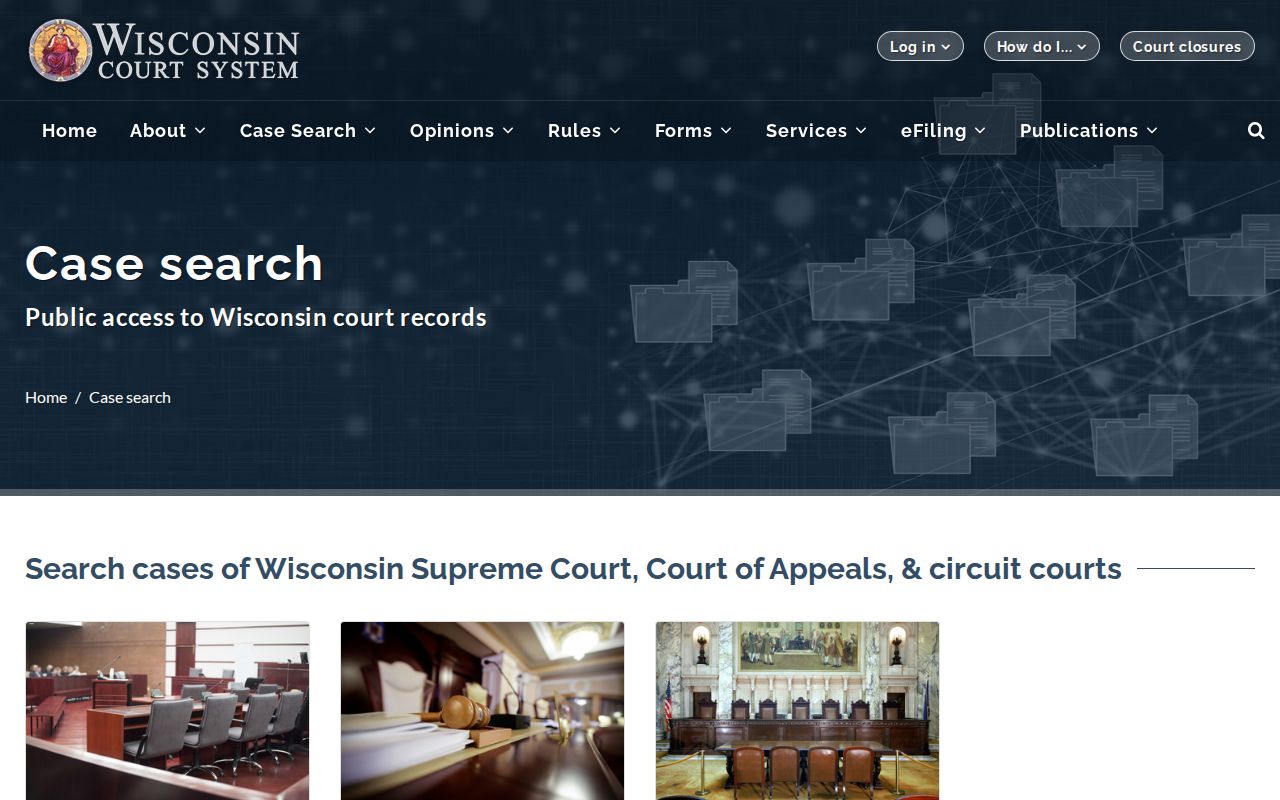
Some disputes generate a court case as well as a recorded instrument. The Wisconsin Circuit Court Access search can help locate a foreclosure, judgment, partition, quiet-title, probate, or mechanic's-lien matter. Its statewide entry page is where a case lookup starts. Courthouse WCCA terminals offer another access channel. Pleadings, exhibits, and certified copies come from the Clerk of Circuit Court. Older paper files may need retrieval.
A court result is a clue. Match any judgment, sheriff's deed, or release to the legal description and recording reference before concluding that an interest changed hands.
Requesting a Juneau County Deed Copy
Start in the LandShark index. Record the parties, recording date, instrument reference, and legal description. If the image is online and readable, compare it against the assessment parcel. It may be missing, illegible, or needed in certified form. Then contact the Register of Deeds at the courthouse office in Mauston. A counter request works with the same identifying details. No per-page or certification fee is posted, so ask before paying.
For a staff-assisted search, bring every identifier you have. Give the office the full legal description, parcel number, grantor and grantee names, and an approximate recording period. Include any book, page, or instrument number copied from an index result. Say whether you want to inspect the record, get a plain copy, or request a certified copy. Those are different requests. A street address alone can be ambiguous. A road may cross municipal lines or a parcel may have been split.
A name query may return several candidates. Compare the town, range, section, lot, block, and recording date before ordering a document. Work backward from a known grantee to the prior grantor. Then go forward from that grantor to check for a later conveyance. Keep any corrective deed, release, or court-ordered transfer in the sequence. Do so when it cites the same legal description. This method reduces the risk of stitching together two parcels that share a surname or street name.
Wisconsin's Public Records Law, Wis. Stat. §§19.31-19.39, supports inspection and copy requests. Identify the document and your preferred format. For older books, ask what the office can retrieve and whether microfilm or archived index materials exist. The deed portal is LandShark; the county directory lists the office at the courthouse.
Recorded, not guaranteed. Juneau County deed records show instruments that reached the public record, but an index is not a title opinion and can contain errors. Have a title professional review ownership and exceptions before a transaction.